
Huzhou Sanjing Cryogenic Equipment Co.,Ltd.: Your Professional Reciprocating Pump Manufacturer!
Sanjing Cryogenic started its career, providing solutions to meet the vast requirement for industrial gases, accompanied by China's economic rocketing, in 2004. After its debut in the gas industry, it soon earned a reputation for its continuous efforts on technical improvements and quick reaction to after-sales service. The company's main products include reciprocating pump, submerged pump, centrifugal pump, pump skid, etc.
-
![Gear Drive Reciprocating Pump]() Gear Drive Reciprocating PumpRedefining Large-Scale Cryogenic Fluid Transfer When standard single-column pumps hit their flow limits, simply running multiple units in parallel becomes inefficient and costly. Our...view more
Gear Drive Reciprocating PumpRedefining Large-Scale Cryogenic Fluid Transfer When standard single-column pumps hit their flow limits, simply running multiple units in parallel becomes inefficient and costly. Our...view more -
![High-Pressure CO2 Cylinder Filling Pump Skid]() High-Pressure CO2 Cylinder Filling Pump SkidProduct Model: Sanjing Cryogenic CO2 Booster Pump Skid Flow Rate: 200–400 L/h Discharge Pressure: Up to 200 bar (20 MPa) The Sanjing Cryogenic CO2 Cylinder Filling Pump Skid is a compact, fully...view more
High-Pressure CO2 Cylinder Filling Pump SkidProduct Model: Sanjing Cryogenic CO2 Booster Pump Skid Flow Rate: 200–400 L/h Discharge Pressure: Up to 200 bar (20 MPa) The Sanjing Cryogenic CO2 Cylinder Filling Pump Skid is a compact, fully...view more -
![LCO2 Pump Skid]() LCO2 Pump SkidDesigned and manufactured by Huzhou Sanjing Cryogenic Equipment Co., Ltd., this high-performance reciprocating pump is purpose-built for handling liquid carbon dioxide (LCO₂) at cryogenic...view more
LCO2 Pump SkidDesigned and manufactured by Huzhou Sanjing Cryogenic Equipment Co., Ltd., this high-performance reciprocating pump is purpose-built for handling liquid carbon dioxide (LCO₂) at cryogenic...view more -
![Gear Reduction Reciprocating Piston Pump]() Gear Reduction Reciprocating Piston PumpOur gear reduction reciprocating piston pump is a high-performance, industrial-grade cryogenic fluid transfer solution, engineered for reliable, long-term operation in demanding air separation,...view more
Gear Reduction Reciprocating Piston PumpOur gear reduction reciprocating piston pump is a high-performance, industrial-grade cryogenic fluid transfer solution, engineered for reliable, long-term operation in demanding air separation,...view more -
![High Head Cryogenic Centrifugal Pump]() High Head Cryogenic Centrifugal PumpProduct Overview The SLP-24/180 High Head Cryogenic Centrifugal Pump is a single-stage, single-suction, direct-coupled cryogenic pump exclusively engineered for small-to-medium flow,...view more
High Head Cryogenic Centrifugal PumpProduct Overview The SLP-24/180 High Head Cryogenic Centrifugal Pump is a single-stage, single-suction, direct-coupled cryogenic pump exclusively engineered for small-to-medium flow,...view more -
![Oxygen-Specific Cryogenic Filling Pump]() Oxygen-Specific Cryogenic Filling PumpProduct Overview The SLP-85/180M is a vertical single-stage centrifugal pump engineered specifically for cryogenic fluid transfer. Featuring a labyrinth seal and compact vertical layout, it...view more
Oxygen-Specific Cryogenic Filling PumpProduct Overview The SLP-85/180M is a vertical single-stage centrifugal pump engineered specifically for cryogenic fluid transfer. Featuring a labyrinth seal and compact vertical layout, it...view more -
![Vertical Labyrinth Seal Cryogenic Centrifugal Pump]() Vertical Labyrinth Seal Cryogenic Centrifugal PumpProduct Overview The SLP-85/180M is a vertical single-stage centrifugal pump engineered specifically for cryogenic fluid transfer. Featuring a labyrinth seal and compact vertical layout, it...view more
Vertical Labyrinth Seal Cryogenic Centrifugal PumpProduct Overview The SLP-85/180M is a vertical single-stage centrifugal pump engineered specifically for cryogenic fluid transfer. Featuring a labyrinth seal and compact vertical layout, it...view more -
![SLP Horizontal Labyrinth Seal Centrifugal Pump (Explosion-proof)]() SLP Horizontal Labyrinth Seal Centrifugal Pump (Explosion...Key Specifications Flow Rate: 225 m³/h Head: 56 m Configuration: Horizontal single-stage centrifugal pump Seal Type: Labyrinth seal (non-contacting, wear-free, long service life)...view more
SLP Horizontal Labyrinth Seal Centrifugal Pump (Explosion...Key Specifications Flow Rate: 225 m³/h Head: 56 m Configuration: Horizontal single-stage centrifugal pump Seal Type: Labyrinth seal (non-contacting, wear-free, long service life)...view more -
![High Head And Flow Rate Centrifugal Pump]() High Head And Flow Rate Centrifugal Pump1.Performance Features Ⅰ, High Flow Efficiency Designed for large-flow applications, the 315 m³/h capacity meets the demands of large-scale cylinder filling, tank unloading, and circulation...view more
High Head And Flow Rate Centrifugal Pump1.Performance Features Ⅰ, High Flow Efficiency Designed for large-flow applications, the 315 m³/h capacity meets the demands of large-scale cylinder filling, tank unloading, and circulation...view more -
![Excellent Performance Piston Pump]() Excellent Performance Piston PumpOur cryogenic piston pump, Model SBP400-800/250, is a high-precision, heavy-duty positive displacement fluid transfer equipment, specially engineered for the safe and efficient delivery of...view more
Excellent Performance Piston PumpOur cryogenic piston pump, Model SBP400-800/250, is a high-precision, heavy-duty positive displacement fluid transfer equipment, specially engineered for the safe and efficient delivery of...view more -
![High-Pressure Cryogenic Piston Pump]() High-Pressure Cryogenic Piston PumpWhen your application demands ultra-high discharge pressures and precise flow control for liquefied gases, a standard centrifugal pump is not enough. Our Cryogenic Piston Pump (also known as a...view more
High-Pressure Cryogenic Piston PumpWhen your application demands ultra-high discharge pressures and precise flow control for liquefied gases, a standard centrifugal pump is not enough. Our Cryogenic Piston Pump (also known as a...view more -
![Standard Cryogenic Reciprocating Pump]() Standard Cryogenic Reciprocating PumpA high-precision positive displacement pump specialized for ultra-low-temperature media, adopting reciprocating plunger/piston structure to realize stable, high-pressure conveyance of cryogenic...view more
Standard Cryogenic Reciprocating PumpA high-precision positive displacement pump specialized for ultra-low-temperature media, adopting reciprocating plunger/piston structure to realize stable, high-pressure conveyance of cryogenic...view more


Why Choose Us
Nearly 20 years of cryogenic engineering expertise
With two decades dedicated to cryogenic technology R&D and manufacturing, Sanjing Cryogenic has developed systematic core technologies and over 30 patented solutions. This long-term technical accumulation ensures stable performance and reliable operation for various industrial applications.
Strong in-house manufacturing and testing capabilities
The company operates a modern, fully equipped factory with comprehensive testing facilities. A technical team accounting for one-third of its 110 employees enables precise process control and consistent product quality across every production stage.
Proven product portfolio and wide industry adoption
Sanjing provides a full range of cryogenic equipment, including high-pressure L-CNG pumps, LNG submerged pumps, piston pumps, gas cylinder filling pumps, cryogenic centrifugal pumps, vaporizers, and customized pump skids. These products are already used by multinational gas companies, large steel mills, ASU manufacturers, and major natural gas enterprises, validating their reliability in demanding industrial environments.
Fast service response and stable supply capability
The company is recognized for its quick technical support and after-sales response, helping buyers reduce downtime and operational risks. With mature product lines and ongoing development of large-scale pump solutions, Sanjing maintains dependable supply capabilities for both standard and customized equipment.
Benefits of Reciprocating Pump

High pressure capability
Reciprocating pumps excel at generating high pressures, making them suitable for applications that require pressure boosting. The piston's ability to compress the fluid within the cylinder allows for efficient transfer of fluids at pressures significantly higher than those achievable with centrifugal pumps.
Good handling of viscous fluids
Reciprocating pumps can effectively handle viscous fluids, including those with high viscosity and those containing solid particles. The piston-cylinder design allows for more controlled and forceful compression of the fluid, ensuring smooth transfer even with challenging fluid properties.


Precise flow control
The reciprocating motion of the piston allows for precise metering and control of fluid flow. This makes reciprocating pumps suitable for applications where accurate fluid displacement is crucial, such as in metering systems, fuel injection systems, and chemical processing.
Versatility
Reciprocating pumps can be designed and configured to meet specific application requirements. They can be customized in terms of flow rate, pressure, and material compatibility, making them versatile solutions for a wide range of industrial needs.

Product Parameters

Application of Reciprocating Pump



Oil and gas
Oil and gas industry applications include disposal, offshore oil, production, injection, feed, charge, steam generators, mainline, and field gathering.
Chemical processing
Raw natural gas liquids (NGLs) derived from fracking need to undergo multi-stage processing in order to convert into chemical products such as PVC. Chemical processors frequently use reciprocating pumps for rigorous processing operations.
Food processing
Reciprocating pumps in the food industry allow for the movement of ingredients from one vat to another, the transportation of liquids of various viscosities, and the delivery of water for food safety and sanitation.
Mining
The safe and efficient transportation of minerals from mines to processing locations is a key procedure of successful mining operations. Slurry pumps are one critical application in which reciprocating pumps play a large role.
Paper and pulp manufacturing
Mechanical and chemical pulping processes both use reciprocating pumps that are able to withstand intense operating conditions.
Soap manufacturing
It takes a lot of processing to transform raw soaps, liquids, and powders into products ready for consumer purchase. Reciprocating pumps are a key component in many of these manufacturing and refining processes.
Wastewater treatment
Wastewater treatment plants are responsible for contaminant removal, purification processing, and the proper treatment of waste effluent. Reliable and durable reciprocating pumps are extremely important to maintain the effectiveness of a treatment plant’s operations.
Packaging And Shipping
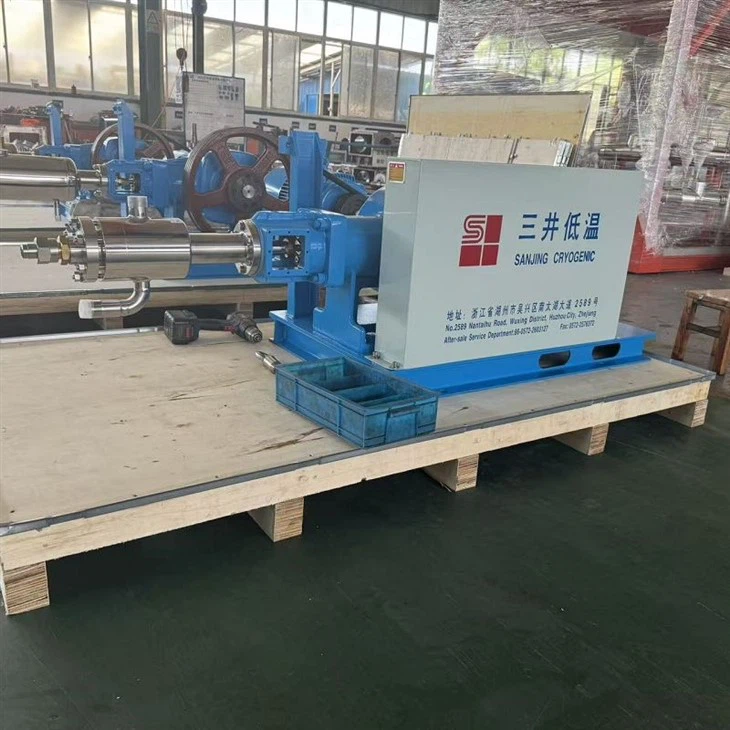
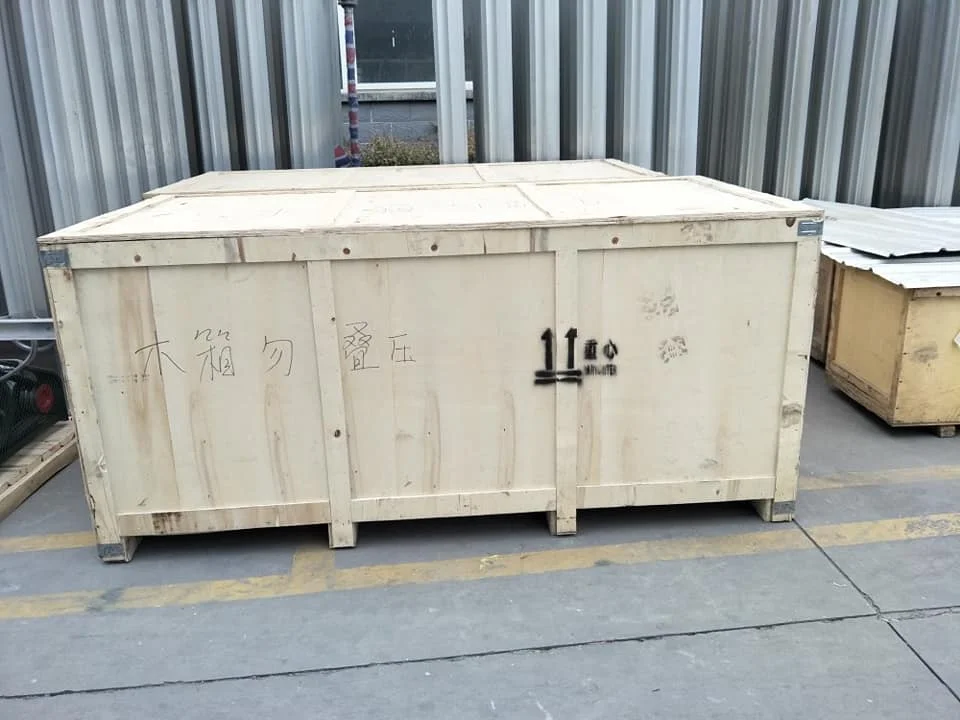
Standard export wooden box packing
Pallet
3.20ft /40ft container
Customer's Request

Certifications


FAQ
As one of the leading reciprocating pump manufacturers in China, we warmly welcome you to buy discount reciprocating pump in stock here and get quotation from our factory. For custom service and OEM service, contact us now.
Ultra high Pressure Pumps, Reciprocating Cryogenic Pump, Carbon Dioxide Reciprocating Pump


