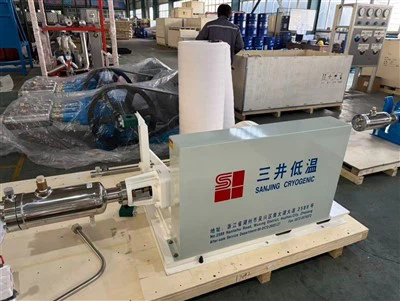


Hey there! As a supplier of Ultra-high Pressure Pumps, I often get asked about pressure pulsation. So, let's dig into what exactly the pressure pulsation of ultra-high pressure pumps is.
Understanding Pressure Pulsation
First off, pressure pulsation is like the heartbeat of a pump, but it's not always a steady rhythm. In ultra-high pressure pumps, it refers to the periodic fluctuations in pressure that occur during the pump's operation. These pumps are designed to generate extremely high pressures, and the way they do that can lead to these pulsations.
Ultra-high pressure pumps work by forcing fluid through a system at very high speeds and pressures. The process usually involves a piston or a diaphragm moving back and forth to create the necessary pressure. Each time the piston or diaphragm moves, it causes a sudden change in the fluid's pressure. This rapid change results in pressure pulsations.
Think of it like a wave in the ocean. When a wave forms, it has a peak and a trough. Similarly, pressure pulsations have high and low points. These fluctuations can happen several times per second, depending on the pump's design and operating conditions.
Causes of Pressure Pulsation in Ultra-high Pressure Pumps
There are a few key factors that contribute to pressure pulsation in these pumps.
Pump Design
The design of the pump plays a huge role. For example, in a Multistage Reciprocating Pump, the multiple stages of compression can cause more complex pressure pulsations. Each stage adds its own set of pressure changes as the fluid is compressed further.


The number of pistons or diaphragms also matters. A pump with more pistons may have different pulsation patterns compared to one with fewer. The way these moving parts are arranged and timed can either amplify or reduce the pulsations.
Fluid Properties
The type of fluid being pumped can affect pressure pulsation. Viscous fluids, for instance, may cause more resistance as they flow through the pump. This resistance can lead to larger pressure changes and more pronounced pulsations. On the other hand, less viscous fluids may flow more smoothly, resulting in smaller pulsations.
The presence of air or gas bubbles in the fluid can also be a problem. When these bubbles are compressed, they can cause sudden pressure drops and then rapid increases as they collapse. This can create erratic pressure pulsations.
Operating Conditions
The speed at which the pump is running is a major factor. Higher speeds generally mean more frequent and larger pressure pulsations. As the pump operates faster, the pistons or diaphragms move more quickly, causing more rapid changes in pressure.
The pressure level itself can also influence pulsation. At very high pressures, the forces acting on the fluid and the pump components are much greater. This can lead to more significant pressure fluctuations.
Effects of Pressure Pulsation
Pressure pulsation can have several effects on the pump and the overall system.
Pump Wear and Tear
The constant pressure fluctuations can cause excessive wear on the pump components. The pistons, valves, and seals are all subjected to varying forces, which can lead to premature failure. Over time, this can increase maintenance costs and reduce the pump's lifespan.
System Performance
Pulsations can also affect the performance of the entire system. In some applications, such as in hydraulic systems, the fluctuations can cause vibrations in the pipes and other components. These vibrations can lead to noise, which can be a nuisance in industrial settings.
In precision applications, like in some manufacturing processes, pressure pulsations can affect the quality of the end product. For example, in a process where a precise amount of fluid needs to be dispensed at a constant pressure, the pulsations can cause variations in the flow rate, resulting in inconsistent product quality.
Controlling Pressure Pulsation
To deal with pressure pulsation, there are several strategies that can be employed.
Dampeners
One common solution is to use dampeners. These are devices that are installed in the pump system to absorb and reduce the pressure pulsations. They work by providing a cushioning effect, similar to how a shock absorber works in a car. There are different types of dampeners, such as air chambers and hydraulic accumulators.
Pump Design Modifications
Improving the pump design can also help. For example, using a High Pressure Reciprocating Pump with a more balanced design can reduce pulsations. This may involve using multiple pistons in a way that their pressure changes cancel each other out to some extent.
The timing of the piston or diaphragm movements can also be adjusted. By carefully synchronizing these movements, the pressure pulsations can be minimized.
Fluid Management
Ensuring that the fluid is properly degassed can reduce the effects of air or gas bubbles. This can be done using various degassing techniques, such as vacuum degassing or using chemical additives to prevent bubble formation.
Why Our Ultra-high Pressure Pumps Are a Good Choice
As a supplier of Ultra-high Pressure Pumps, we take pressure pulsation seriously. Our pumps are designed with advanced features to minimize these fluctuations.
We use high-quality materials and precision engineering to reduce wear and tear. Our dampening systems are carefully designed to effectively absorb pressure pulsations, ensuring smooth operation and long pump life.
We also offer customized solutions based on your specific application. Whether you need a pump for a high-precision manufacturing process or a heavy-duty industrial application, we can work with you to find the best pump and control strategy to meet your needs.
Conclusion
Pressure pulsation is an important aspect to consider when dealing with ultra-high pressure pumps. Understanding its causes, effects, and how to control it is crucial for ensuring the reliable operation of your pump and the overall system.
If you're in the market for an ultra-high pressure pump and want to learn more about how we can help you manage pressure pulsation, don't hesitate to reach out. We're here to assist you with all your pump needs and can provide you with the best solutions for your specific application. Let's start a conversation about how our pumps can meet your requirements and improve your operations.
References
- Pump Handbook, by Igor J. Karassik, Joseph P. Messina, Paul Cooper, and Charles C. Heald
- Fluid Mechanics, by Frank M. White