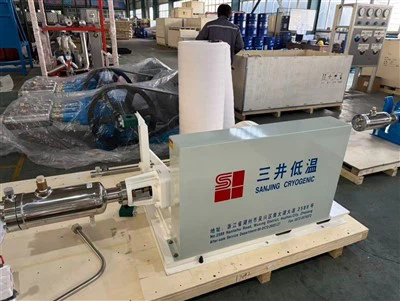


A seal centrifugal pump is a crucial equipment used in various industries to transport fluids. The sealing mechanism of a centrifugal pump plays a vital role in its performance and efficiency. There are two main types of seals commonly used in centrifugal pumps: mechanical seals and packing seals. As a seal centrifugal pump supplier, I will delve into the differences between these two types of seals to help you make an informed decision when choosing the right seal for your centrifugal pump.
Structure and Working Principle
- Mechanical Seal: A mechanical seal consists of two flat faces that are held together under pressure to prevent fluid leakage. One face is stationary and is mounted on the pump casing, while the other face rotates with the pump shaft. The two faces are typically made of hard materials such as ceramic or carbide to withstand the high pressures and temperatures generated during pump operation. The mechanical seal works by creating a tight seal between the two faces, which prevents fluid from leaking out of the pump.
- Packing Seal: A packing seal, also known as gland packing, is a type of seal that uses a flexible material such as asbestos, graphite, or PTFE to create a seal between the pump shaft and the pump casing. The packing material is placed in a gland around the shaft and is compressed by a gland follower. As the gland follower is tightened, the packing material is compressed against the shaft, creating a seal that prevents fluid from leaking out of the pump.
Sealing Performance
- Mechanical Seal: Mechanical seals offer excellent sealing performance and can achieve very low leakage rates. They are designed to provide a reliable seal even under high pressures and temperatures, making them suitable for use in a wide range of applications. Mechanical seals are also less prone to wear and tear compared to packing seals, which means they require less maintenance and have a longer service life.
- Packing Seal: Packing seals are less effective than mechanical seals in terms of sealing performance and can have higher leakage rates. The packing material can wear out over time, especially if the pump is operating at high speeds or under high pressures, which can lead to increased leakage. Packing seals also require more frequent maintenance compared to mechanical seals, as the packing material needs to be replaced periodically to ensure a proper seal.
Installation and Maintenance
- Mechanical Seal: Installing a mechanical seal requires a certain level of technical expertise and precision. The seal faces need to be aligned correctly to ensure a proper seal, and the seal needs to be installed in a clean and dry environment to prevent contamination. Once installed, mechanical seals require minimal maintenance, as they are designed to operate for long periods without requiring adjustment or replacement.
- Packing Seal: Packing seals are relatively easy to install and do not require any special tools or equipment. However, they require more frequent maintenance compared to mechanical seals, as the packing material needs to be adjusted and replaced periodically to ensure a proper seal. The gland follower needs to be tightened regularly to maintain the compression of the packing material, and the packing material needs to be lubricated to prevent wear and tear.
Cost
- Mechanical Seal: Mechanical seals are generally more expensive than packing seals due to their complex design and high-performance materials. However, the initial cost of a mechanical seal can be offset by its longer service life and lower maintenance requirements. In the long run, mechanical seals can be more cost-effective than packing seals, especially in applications where reliability and performance are critical.
- Packing Seal: Packing seals are less expensive than mechanical seals and are a more cost-effective option for applications where leakage rates are not critical. However, the cost savings of using a packing seal can be offset by its higher maintenance requirements and shorter service life.
Applications
- Mechanical Seal: Mechanical seals are commonly used in applications where high sealing performance and reliability are required, such as in the chemical, pharmaceutical, and food processing industries. They are also suitable for use in applications where the fluid being pumped is hazardous or corrosive, as they can provide a tight seal and prevent leakage.
- Packing Seal: Packing seals are commonly used in applications where leakage rates are not critical, such as in the water and wastewater treatment industries. They are also suitable for use in applications where the fluid being pumped is relatively clean and non-corrosive, as they can provide a simple and cost-effective sealing solution.
In conclusion, the choice between a mechanical seal and a packing seal depends on several factors, including the application requirements, the operating conditions, and the budget. As a seal centrifugal pump supplier, we can help you select the right seal for your centrifugal pump based on your specific needs. If you are looking for a high-performance and reliable sealing solution, a mechanical seal may be the best choice for you. However, if you are on a tight budget and leakage rates are not critical, a packing seal may be a more cost-effective option.
If you are interested in purchasing a seal centrifugal pump or need more information about mechanical seals and packing seals, please feel free to contact us. We have a team of experienced engineers and technicians who can provide you with expert advice and support. We also offer a wide range of seal centrifugal pumps, including Cryogenic Centrifugal Pump, High Pressure Centrifugal Pump Skid, and Centrifugal Gear Pump, to meet your specific needs.


References
- "Centrifugal Pumps: Design and Application" by Igor J. Karassik, Joseph P. Messina, Paul Cooper, and Charles C. Heald.
- "Mechanical Seals and Their Applications" by A.W. Lebeck.
- "Packing and Gaskets Handbook" by Robert K. Green.