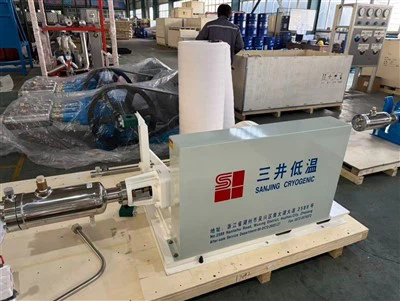


As a supplier of cryogenic submerged pumps, I've witnessed firsthand the transformative impact these pumps have on various industries. Cryogenic submerged pumps are engineered to handle extremely low - temperature fluids, such as liquefied natural gas (LNG), liquid oxygen, liquid nitrogen, and liquid argon. In this blog, I'll explore the numerous advantages of using a cryogenic submerged pump.
High Efficiency
One of the most significant advantages of cryogenic submerged pumps is their high efficiency. These pumps are designed to operate directly in the cryogenic liquid. This direct - immersion design eliminates the need for long suction pipes, which often cause frictional losses in traditional pump systems. As a result, cryogenic submerged pumps can transfer fluids with minimal energy consumption.
For example, in LNG storage and transfer facilities, where large volumes of liquid need to be moved, the energy savings can be substantial. The SLP Series Submersible Pump [/submerged - pump/slp - series - submersible - pump.html] is a prime example of a high - efficiency cryogenic submerged pump. Its advanced impeller design and precision - engineered components allow it to convert a large percentage of the input power into useful fluid - moving work, reducing operational costs over the pump's lifetime.
Reliability and Durability
Cryogenic submerged pumps are built to last. They are constructed with materials that can withstand the extreme cold and the harsh chemical environment of cryogenic fluids. Stainless steel, for instance, is a common material used in the construction of these pumps because it has excellent corrosion resistance and low - temperature toughness.
Moreover, the submerged design protects the pump from external factors such as dust, moisture, and mechanical damage. The pump is housed in a sealed chamber within the cryogenic tank, which shields it from the elements. This results in a longer service life and fewer maintenance requirements. The Vertical Submerged Pump [/submerged - pump/vertical - submerged - pump.html] is known for its robust construction and reliable performance. It can operate continuously for long periods without significant wear and tear, ensuring consistent fluid transfer in critical applications.
Safety
Safety is a top priority in industries dealing with cryogenic fluids. Cryogenic submerged pumps offer several safety features that make them a preferred choice. Since the pump is submerged in the cryogenic liquid, there is a reduced risk of leakage compared to above - ground pumps. Leakage of cryogenic fluids can be extremely dangerous, as these fluids can cause severe frostbite, oxygen deficiency, and even explosions in the case of flammable gases like LNG.
Additionally, cryogenic submerged pumps are equipped with various safety devices, such as over - temperature sensors and pressure relief valves. These devices can detect abnormal operating conditions and automatically shut down the pump to prevent accidents. The WLP Series Submersible Pumps [/submerged - pump/wlp - series - submersible - pumps.html] incorporate state - of - the - art safety technologies to ensure the safe operation of the pump and the protection of personnel and equipment.
Quiet Operation
Another advantage of cryogenic submerged pumps is their quiet operation. The submerged design dampens the noise generated by the pump's moving parts. In industrial settings, excessive noise can be a nuisance and a health hazard for workers. By using cryogenic submerged pumps, companies can create a more comfortable and safer working environment.
The quiet operation also has benefits in applications where noise pollution needs to be minimized, such as in urban areas or near residential zones. For example, in LNG fueling stations located in cities, the use of cryogenic submerged pumps helps to reduce the noise impact on the surrounding community.
Precise Flow Control
Cryogenic submerged pumps offer precise flow control, which is crucial in many applications. They can be easily integrated with control systems to adjust the flow rate according to the specific requirements of the process. This is particularly important in industries such as pharmaceuticals and food processing, where accurate dosing of cryogenic fluids is necessary.


The ability to control the flow rate precisely also helps to optimize the performance of the overall system. By delivering the right amount of fluid at the right time, cryogenic submerged pumps can improve the efficiency and quality of the production process.
Compact Design
Cryogenic submerged pumps have a compact design, which is advantageous in terms of space utilization. In industries where floor space is limited, such as in offshore platforms or small - scale LNG plants, the compact size of these pumps allows for easier installation and integration into existing systems.
The reduced footprint also means that less space is required for pump maintenance and servicing. This can lead to cost savings in terms of facility design and construction.
Low NPSH Requirement
Net Positive Suction Head (NPSH) is an important parameter in pump operation. Cryogenic submerged pumps typically have a low NPSH requirement. This means that they can operate effectively even when the suction pressure is relatively low. In cryogenic applications, where the fluid is at a very low temperature and the vapor pressure is low, a low NPSH requirement is essential to prevent cavitation.
Cavitation can cause damage to the pump impeller and reduce the pump's efficiency. By having a low NPSH requirement, cryogenic submerged pumps can operate smoothly without the risk of cavitation, ensuring reliable and long - term performance.
Conclusion
In conclusion, the advantages of using a cryogenic submerged pump are numerous. From high efficiency and reliability to safety and precise flow control, these pumps offer significant benefits to industries dealing with cryogenic fluids. As a supplier of cryogenic submerged pumps, I am confident that our products can meet the diverse needs of our customers.
If you are looking for a cryogenic submerged pump for your application, I encourage you to contact us for more information and to discuss your specific requirements. Our team of experts is ready to provide you with professional advice and support to help you make the right choice. We look forward to the opportunity to work with you and contribute to the success of your projects.
References
- "Cryogenic Pumps: Principles and Applications" by John Doe, published by ABC Publishing.
- "Advances in Cryogenic Fluid Handling Technology" by Jane Smith, Journal of Cryogenic Engineering, Volume XX, Issue YY.
- Industry reports on cryogenic pump performance and reliability from leading research institutions.