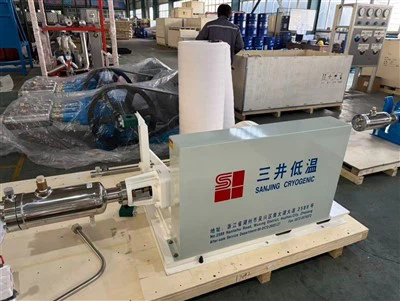


The use of submersible pumps in various industrial and domestic settings is widespread, with different types designed to handle specific fluids. As a supplier of the SLP Series Submersible Pump, I often receive inquiries about its compatibility with chemical - containing liquids. This blog aims to explore whether the SLP Series Submersible Pump can be used in such environments, taking into account its design, materials, and the nature of chemical - containing liquids.


Understanding the SLP Series Submersible Pump
The SLP Series Submersible Pump is engineered with specific features to meet a range of pumping needs. It is designed to operate while fully submerged in the liquid it is pumping, which provides several advantages such as efficient cooling and quiet operation. The pump is built with high - quality materials to ensure durability and reliable performance under normal operating conditions. You can find more detailed information about the SLP Series Submersible Pump on our website.
Chemical - Containing Liquids: A Complex Challenge
Chemical - containing liquids can vary greatly in their composition, properties, and aggressiveness. They may include acids, alkalis, solvents, and various industrial chemicals. The corrosive nature of these substances can pose a significant threat to the components of a submersible pump. For example, strong acids can react with metal parts, causing corrosion and reducing the pump's lifespan. Alkalis, on the other hand, may attack certain types of plastics and rubber seals.
Compatibility Factors
Material Selection
The materials used in the construction of the SLP Series Submersible Pump play a crucial role in determining its compatibility with chemical - containing liquids. The pump's casing, impeller, and other internal components are typically made of materials such as stainless steel, cast iron, or engineered plastics. Stainless steel is known for its corrosion resistance, but different grades of stainless steel have varying levels of resistance to different chemicals. For instance, some grades are more resistant to acids, while others are better suited for alkaline environments.
Engineered plastics, such as polypropylene or polyethylene, can offer excellent chemical resistance in certain applications. They are lightweight, non - corrosive, and can withstand a wide range of chemicals. However, their mechanical strength may be lower compared to metals, which could limit their use in high - pressure or high - flow applications.
Sealing and Gaskets
The seals and gaskets in the SLP Series Submersible Pump are essential for preventing the leakage of the pumped liquid and protecting the internal components from chemical attack. These components are usually made of rubber or elastomeric materials. Different rubber compounds have different chemical resistance properties. For example, Viton rubber is highly resistant to oils, fuels, and many chemicals, while EPDM rubber is more suitable for applications involving water, steam, and some mild chemicals.
Corrosion Protection
In addition to using corrosion - resistant materials, the SLP Series Submersible Pump may also be treated with special coatings or surface treatments to enhance its resistance to chemical corrosion. These treatments can form a protective barrier between the metal surface and the chemical - containing liquid, reducing the rate of corrosion.
Case - by - Case Assessment
Given the wide variety of chemical - containing liquids, it is not possible to give a definitive yes or no answer to whether the SLP Series Submersible Pump can be used in such environments. Each application needs to be evaluated on a case - by - case basis. Factors such as the type and concentration of the chemicals, the temperature and pressure of the liquid, and the flow rate requirements all need to be considered.
For example, if the chemical - containing liquid is a dilute solution of a mild acid or alkali, and the pump is made of appropriate corrosion - resistant materials, it may be possible to use the SLP Series Submersible Pump. However, if the liquid contains highly concentrated, aggressive chemicals, such as concentrated sulfuric acid or hydrofluoric acid, the pump may require special modifications or may not be suitable at all.
Alternative Pump Options
If the SLP Series Submersible Pump is not suitable for a particular chemical - containing liquid application, there are other pump options available. Our company also offers WLP Series Submersible Pumps, which are designed with different materials and features to handle more aggressive chemical environments. Additionally, the LNG Submerged Pump is specifically engineered for handling liquefied natural gas and other cryogenic fluids.
Conclusion and Call to Action
In conclusion, the use of the SLP Series Submersible Pump in chemical - containing liquids depends on a variety of factors. While it may be suitable for some mild chemical applications, a detailed assessment is necessary for more aggressive chemical environments. Our team of experts is available to provide in - depth technical advice and help you determine the most appropriate pump for your specific needs.
If you are considering using a submersible pump for a chemical - containing liquid application, we encourage you to contact us for a consultation. We can provide you with detailed product information, conduct a feasibility study, and offer customized solutions. Let's work together to find the best pumping solution for your project.
References
- "Handbook of Chemical Resistance of Plastics and Elastomers"
- "Corrosion Engineering: Principles and Practice"